

A gray divorce isn't a legal term you'll find in a Florida law book. It’s what we call the separation of couples over the age of 50. This isn't usually about a sudden, explosive end to a marriage. Instead, it’s often a quiet, gradual drifting apart after decades together, where two people realize their future happiness lies on separate paths.
Even as overall divorce rates have fallen, this trend is becoming surprisingly common. At Foley Family Law, we are dedicated to helping clients in Pasco, Pinellas, and Hillsborough Counties navigate these unique challenges. We handle all family and divorce issues, including for our LGBTQ+ clients, and we do not discriminate.
Understanding The Rise Of Gray Divorce
For generations, marriage was almost universally seen as a "’til death do us part" commitment, making a divorce later in life a true rarity. That landscape has changed dramatically. A “gray divorce” refers to this growing trend of couples ending their marriages after decades of shared history, often well after the kids have left home.
This isn't necessarily a story of failure. More often, it’s a reflection of evolving personal priorities and societal norms.
The decision to part ways after a long-term marriage is deeply personal. It’s less about one dramatic event and more about a slow realization that individual needs and desires have changed. As people live longer, healthier lives, the idea of spending another 20, 30, or even 40 years in an unfulfilling relationship just doesn't sit right with many.
Key Drivers Behind Later-In-Life Splits
So, what’s behind this surge in gray divorces? A few core reasons stand out.
- We're Living Longer: With people living well into their 80s and 90s, retirement is no longer an endpoint but a whole new chapter. Many people want to make the most of this "third act" and feel their current partnership doesn't support their goals for personal growth and happiness.
- The 'Empty Nest' Reality: After the kids grow up and leave home, a couple is often left alone together for the first time in decades. This new dynamic can throw a spotlight on underlying issues or reveal that the main thing holding them together was the shared project of parenting.
- Cultural Attitudes Have Shifted: There is far less social stigma attached to divorce today than in our parents' or grandparents' generations. This cultural shift, combined with a greater emphasis on individual fulfillment, empowers people to leave marriages that are no longer working for them.
For many, a gray divorce isn’t about ending a life but about starting a new one. It represents a conscious choice to prioritize personal well-being and pursue a future that feels more authentic, even if it means changing a long-established family structure.
A Growing Trend In Florida And Beyond
The rise of later-in-life divorce isn't just a gut feeling; it’s a well-documented demographic shift. While divorce rates for younger couples have actually declined, the rate for those over 50 has skyrocketed.
In fact, gray divorce has seen a dramatic increase in recent decades. Today, about 36% of all divorces in the U.S. involve people over 50. That’s a massive jump from just 8.7% in 1990. You can learn more about these divorce statistics from Pew Research Center.
This chart really puts the trend into perspective.
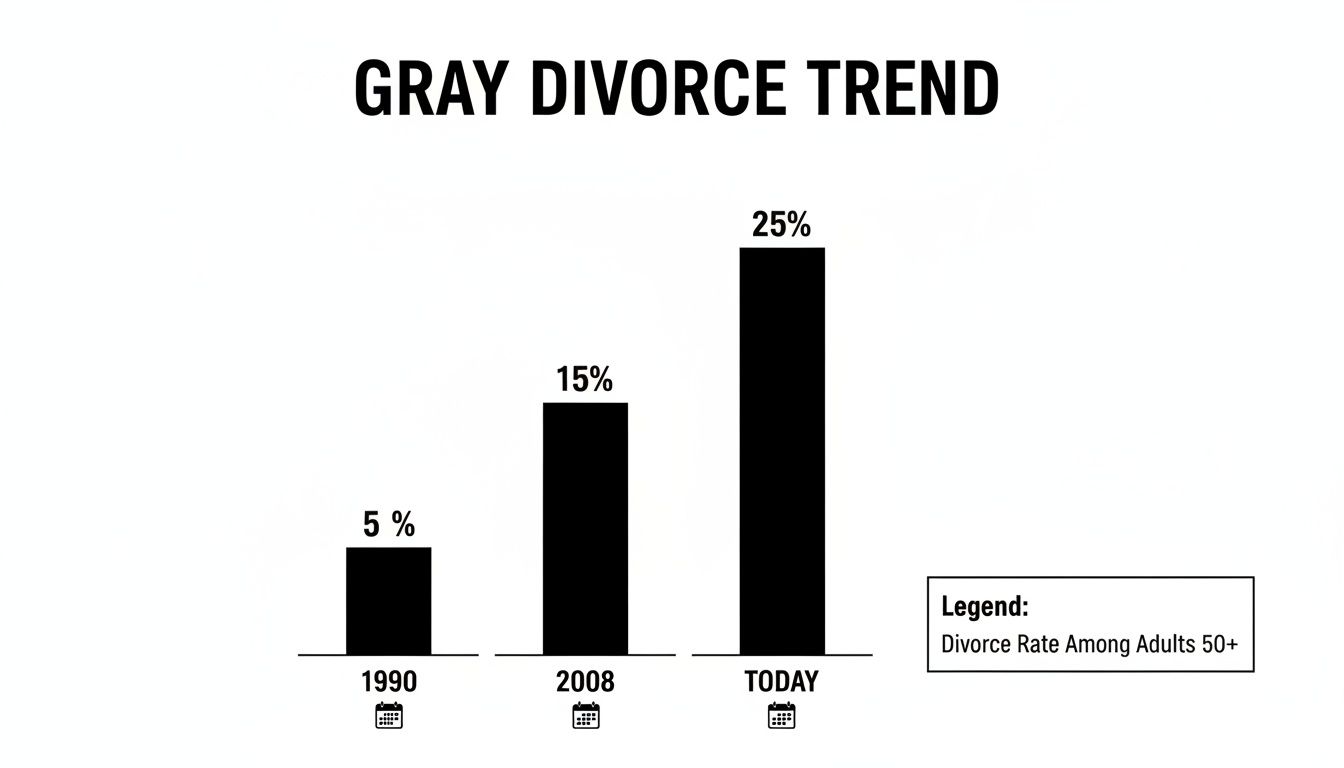
The data makes it clear: ending a marriage later in life has become a much more common reality. At Foley Family Law, we're dedicated to helping clients in Pasco, Pinellas, and Hillsborough Counties understand the unique legal and financial challenges that come with this decision, including for our LGBTQ+ clients whose long-term relationships may predate legal marriage.
Untangling Decades Of Intertwined Finances

After 20, 30, or even 40 years of marriage, your finances aren't just mixed; they're woven together like the roots of ancient trees. In a gray divorce, this is often the single most challenging part of the process. We're not just talking about splitting a joint checking account. We’re talking about a lifetime of shared assets, debts, and future income streams.
Here in Florida, the law operates on the principle of equitable distribution. That doesn't automatically mean a 50/50 split. It means a fair division of all marital property—every asset and debt acquired by either of you during the marriage, no matter whose name is on the title.
Dividing A Lifetime Of Shared Assets
Think about everything you’ve built together. The family home, the investment portfolios you carefully nurtured, the retirement accounts you were both banking on for your golden years. All of it is considered marital property.
A Florida court will identify, value, and then divide these assets. This process can get particularly complicated when you’re dealing with things like:
- The Marital Home: Deciding whether to sell it or have one spouse buy the other out is a massive decision, carrying huge financial and emotional weight.
- Business Interests: If one or both of you own a business, a professional valuation is almost always necessary to figure out what it's worth for division.
- Investments and Collections: Stock portfolios, bonds, art collections, or other valuable collectibles all go into the pot for equitable distribution.
During a gray divorce, couples often have to liquidate some of these shared properties. Understanding how to liquidate assets for maximum return can be a crucial step in making sure both parties walk away with a fair share.
The Role Of Alimony Or Spousal Support
In a long-term marriage, it's pretty common for one spouse to have a much higher earning capacity. To balance the scales, Florida courts can award alimony, also known as spousal support. This isn't a punishment; it’s a way to ensure both people can maintain a standard of living that's reasonably close to what they had during the marriage.
A judge will look at many factors: the length of the marriage, the health and age of each spouse, their earning potential, and their contributions to the marriage—including non-financial ones like being a homemaker. If you're wondering about equitable distribution vs. community property, our firm has resources that explain how Florida's unique approach impacts these decisions. You might be interested in our guide on equitable distribution to get a better handle on these principles.
The goal of alimony in a gray divorce is to prevent one spouse from facing financial ruin while the other remains secure. It’s a mechanism to promote fairness and allow the lower-earning spouse a chance to become self-supporting or live securely in retirement.
The financial impact of a gray divorce often hits women the hardest. Studies have shown their standard of living can plummet by about 45% post-divorce, a stark contrast to the 21% drop men typically experience. This gap usually comes down to historical income disparities and a greater reliance on a spouse's retirement funds.
Protecting Your Retirement Is Critical
For most couples over 50, their retirement accounts—401(k)s, IRAs, and pensions—are their largest assets. This is a critical point many people miss: any funds contributed or growth that occurred during the marriage are considered marital property under Florida law.
Even if a 401(k) is only in one spouse's name, the portion that grew during the marriage belongs to the marital estate. Dividing these accounts isn't straightforward; it requires a specific court order, making skilled legal guidance absolutely essential.
For our clients in Pasco, Pinellas, and Hillsborough Counties, we at Foley Family Law know that protecting these future funds is paramount. We are here to serve every member of our community, including handling gay divorce and other LGBTQ+ family law issues, to ensure every client gets the fair and knowledgeable representation they deserve.
Protecting Your Retirement And Healthcare

When you’re facing a divorce later in life, two questions tend to drown out all the others: "Will I ever be able to retire?" and "How will I afford healthcare?"
These aren't just valid questions; they are the central pillars of your future security. After spending decades building a life together, the thought of managing these huge financial and medical needs on your own can feel completely overwhelming.
The good news is that Florida law has frameworks for untangling these exact issues. The key is to be proactive and understand your rights from the very beginning. With a solid legal strategy, you can protect the retirement you’ve worked so hard for and ensure you have the healthcare you need.
Securing Your Financial Future In Retirement
For most couples in Pasco, Pinellas, and Hillsborough Counties, retirement accounts are their single most valuable assets. Under Florida’s equitable distribution laws, any money contributed to or grown within retirement plans during the marriage is considered marital property. This holds true even if the account is only in one spouse's name.
Dividing these accounts isn't a simple 50/50 split; it's a complex legal process that requires real precision.
- Pensions and 401(k)s: These almost always require a special court order to divide them without triggering massive taxes and early withdrawal penalties. This legal document tells the plan administrator exactly how to distribute the funds.
- Military and First Responder Pensions: These plans operate under their own strict, and often confusing, set of rules. You absolutely need a knowledgeable attorney to navigate the red tape and protect the share you’re entitled to.
- Social Security Benefits: This is a huge one that many people miss. If your marriage lasted 10 years or longer, you may have the right to claim Social Security benefits based on your ex-spouse's work record. This doesn't reduce their benefit amount one penny, but it can provide a vital income stream for you down the road.
A gray divorce redefines your retirement picture, but it doesn't have to erase it. The goal is to ensure both spouses can move forward with a fair share of the nest egg they built together, providing a foundation for financial stability in the years to come.
Understanding how to properly handle these assets is a critical part of the process. You can learn more in our detailed guide on dividing retirement accounts in divorce.
Addressing The Healthcare Coverage Gap
Another major source of anxiety—especially for a spouse who isn't yet old enough for Medicare—is health insurance. If you've been covered under your spouse's employer-sponsored plan for years, losing that coverage can be a jarring financial shock. It's absolutely vital to factor the cost of your future healthcare into the divorce settlement.
Thankfully, you have options. It’s important to know that your divorce is considered a qualifying life event, which opens a special enrollment window for you to get new coverage without waiting for the standard open enrollment period.
Your main options will likely be:
- COBRA: This federal law lets you stay on your ex-spouse's plan for a limited time, usually up to 36 months. While it offers great continuity of care, you're now responsible for paying the full premium yourself, which can be shockingly expensive.
- Marketplace Plans: You can buy an individual plan through the Health Insurance Marketplace. Because your marital status and household income have changed, you may now qualify for subsidies that significantly lower your monthly premium costs.
The cost of health insurance in the years between your divorce and becoming eligible for Medicare at age 65 can be substantial. At Foley Family Law, we help our clients across the Tampa Bay area—including our LGBTQ+ clients navigating a gay divorce—account for these future expenses during settlement negotiations. We are committed to helping you build a comprehensive plan for a secure and healthy future long after your divorce is finalized.
To put it all together, navigating the financial landscape of a gray divorce requires a focused strategy. Here's a quick look at the major areas we'll need to address.
Key Financial Considerations In A Florida Gray Divorce
- Retirement Accounts: The main challenge is dividing 401(k)s, pensions, and IRAs without triggering taxes or penalties. The solution in Florida involves using a Qualified Domestic Relations Order (QDRO) or a similar court order to legally transfer funds.
- Health Insurance: A key issue is the loss of coverage from a spouse's employer plan before Medicare eligibility. You can negotiate for alimony to cover COBRA or Marketplace plan premiums, as the divorce is a "qualifying life event" that allows for a special enrollment period.
- Social Security: Many people are unaware of their eligibility for spousal benefits. If you were married for 10 or more years, Florida law allows you to claim benefits on an ex-spouse's record without affecting their amount.
- Alimony/Spousal Support: In a long-term marriage, one spouse may have a significant need for support, especially if they were out of the workforce. Florida law provides for several types of alimony based on the specific circumstances of the marriage, need, and ability to pay.
- Marital Home: A major decision is whether to sell the home or have one spouse buy out the other, especially if it's paid off. In Florida, options include a buyout, an owelty lien to secure the buyout, or a structured sale agreement as part of the equitable distribution process.
Each of these areas presents both a challenge and an opportunity. With careful planning and the right legal guidance, we can turn these potential pitfalls into a stable foundation for your next chapter.
The Impact on Adult Children and Family Dynamics
One of the biggest myths about a gray divorce is that grown children can handle it just fine. Since there are no minor children, the fallout should be minimal, right?
The reality is far more complex. The emotional shockwaves can hit adult children hard, sometimes shaking their entire sense of family history and personal identity. For them, the end of a long marriage can feel like the very foundation of their life has just cracked.
It's common for adult children to grapple with a messy mix of shock, sadness, anger, and a deep sense of loss. Their "home base"—the one constant they could always return to—suddenly feels unstable.
Navigating The Initial Conversation
How you break the news to your kids is a moment that will set the tone for years to come. The goal isn't to assign blame or win them over to your side; it's to present a united front and reassure them that while your marriage is ending, your role as their parents is not.
If at all possible, have this conversation together. This single act can prevent the toxic "good guy vs. bad guy" dynamic from taking root, which can poison family relationships for years. Stick to "we" statements and calmly explain that this was a mutual decision you both came to after a great deal of thought.
When your adult children are expected to be "too old to hurt," it can lead to a wide range of suppressed emotions. They often feel their grief is dismissed, making them feel isolated and invisible during a time when they also need support.
Setting New Family Boundaries
Once the news is out, the focus has to shift toward creating new, healthy boundaries. The absolute number one rule is to never put your children in the middle. They are not your confidants, your messengers, or your therapists.
Venting to them about your ex-spouse forces them into an impossible position and can cause immense emotional damage.
- Avoid Oversharing: Be honest that you're divorcing, but spare them the intimate or negative details about their other parent. This is crucial for protecting your children's ability to have a healthy relationship with both of you.
- Respect Their Relationships: You have to let your children manage their own independent relationships with each parent, free from guilt or pressure from either side.
- Plan for Future Events: Start talking about holidays, grandkids' birthdays, and future weddings early. It might feel awkward at first, but having a game plan reduces the stress and anxiety for everyone involved.
Unfortunately, these situations can sometimes sour, creating deep divisions. Our firm has seen how these dynamics can escalate, and you can learn more about the difficult topic of what happens when a child is turned against a parent by reading our article on examples of parental alienation.
Rebuilding The Family Structure
Your family isn't ending; it's just changing form. This transition takes time and a lot of patience from everyone. Be prepared for your children to grieve the loss of the family unit they've known their entire lives. It's not uncommon for them to feel like their happy childhood memories are now tainted or to question the authenticity of your family's history.
Reassure them that the love and memories were very real, but that people and relationships evolve. As you all move forward, introducing new partners will eventually add another layer to the family dynamic, requiring even more sensitivity and respect for everyone’s feelings.
At Foley Family Law, we get it. Divorce is so much more than a legal process—it's a profound family event. For our clients across Pasco, Pinellas, and Hillsborough Counties, we provide compassionate guidance that addresses these very human elements. We support all families, including LGBTQ+ clients navigating a gay divorce, to help ensure the entire family can transition with grace and preserve the vital relationships that matter most.
Navigating Your Next Steps with Confidence
Moving from uncertainty to action is the single most empowering step you can take. While the road ahead in a gray divorce can feel overwhelmingly complex, breaking it down into manageable steps gives you back a sense of direction and control. The journey doesn't start with court filings; it begins with quiet preparation and informed decision-making.
This is the point where you shift from thinking "what if?" to planning "what's next?" Creating a clear roadmap right now will become the foundation for every decision you make from here on out. It’s about building a strong position for yourself, whether you end up in a negotiation or in the courtroom.
The First Practical Steps
Before you even pick up the phone to call an attorney, you can start organizing your financial life. This initial groundwork will make the entire process smoother, more efficient, and far less stressful. The best place to start is by gathering key documents.
Begin by collecting important financial records. This isn't about digging for dirt; it's about getting a complete, honest picture of your marital estate.
- Financial Statements: Pull together recent statements for all bank accounts, investment portfolios, retirement accounts like 401(k)s and IRAs, and any pensions.
- Tax Returns: Collect at least the last three to five years of your joint tax returns.
- Property Documents: Find the deeds to any real estate you own, titles for all vehicles, and recent mortgage statements.
- Debt Information: Make a clear list of all outstanding debts, from credit cards and car loans to any personal loans.
Taking control of your financial information is the first step toward advocating for your future. This organized approach not only prepares you for legal discussions but also gives you a realistic view of what your post-divorce financial landscape will look like.
Creating a Strategy with the Right Legal Partner
Once you have a solid handle on your financial situation, the next crucial step is to get expert legal guidance. A confidential consultation with a family law attorney who genuinely understands the nuances of a gray divorce is essential. This is not the time for a general practitioner; you need a specialist.
At Foley Family Law, we guide clients across Hillsborough, Pasco, and Pinellas Counties by creating legal strategies that align with their specific goals. We know every family's situation is different, and we are proud to handle gay divorce and all LGBTQ+ family law issues with the dedicated experience these cases deserve.
Our approach often starts with negotiation-based resolutions. These methods are usually less adversarial and more cost-effective—a major benefit when protecting retirement assets is a top priority. For many, exploring options like mediation can lead to a much more amicable outcome. You can learn more about divorce mediation in Florida in our article to see if it might be a good fit for you.
And while we always aim for a collaborative resolution, we are seasoned litigators, fully prepared to protect your interests in court if a fair agreement simply isn’t possible through negotiation. The message is clear: a gray divorce is a complex journey, but with the right legal partner by your side, you can achieve a fair outcome and build a strong, secure foundation for your new beginning.
A Few Common Questions About Gray Divorce In Florida
When you're facing a divorce later in life, the questions that come up are fundamentally different. Forget the typical squabbles of younger couples; this is about protecting a lifetime of work and ensuring your financial security for the long haul. Here are some of the most pressing questions we field from clients across Pasco, Pinellas, and Hillsborough Counties.
Is Alimony A Given In A Florida Gray Divorce?
While it’s never an automatic guarantee, alimony is a very strong possibility in a gray divorce, particularly after a long-term marriage. Under Florida law, for marriages that have lasted for a significant duration, a judge will look very closely at awarding long-term or permanent alimony.
The decision isn’t made in a vacuum. A judge will weigh a whole host of factors: the standard of living you both enjoyed, each person's financial resources, your respective health, and what your future earning potential looks like. The ultimate goal is to prevent one spouse from facing financial ruin after dedicating decades to a shared life. If you want to dive deeper, you can learn more about how spousal maintenance is calculated in our guide.
How Is The Family Home Usually Handled?
For most couples, the home isn’t just their most valuable asset—it's also the most emotionally charged. Florida law demands that it be divided equitably, and there are a few common ways this plays out. One spouse can buy out the other’s share of the equity, the house can be sold with the profits split, or in some cases, a deferred sale can be arranged.
The right path forward depends entirely on your specific financial circumstances, your emotional connection to the home, and how this decision fits into your overall settlement strategy. It’s a major decision that requires careful financial planning.
Can I Keep My Own Retirement Account Untouched?
This is a huge misconception that can get you into serious financial trouble. In Florida, it doesn't matter whose name is on the account. Any portion of a retirement fund, pension, or 401(k) that was earned or grew in value during the marriage is considered a marital asset.
That means it's on the table for equitable distribution. Getting a proper valuation of these complex accounts is absolutely critical to ensuring a fair split that protects both of your financial futures.
What Makes A Gray Divorce Different For LGBTQ+ Couples?
For many LGBTQ+ couples, their shared life and financial partnership began long before marriage equality was the law of the land. This can create some real challenges when trying to define what part of an asset—like a retirement account, a piece of real estate, or an investment portfolio—is actually "marital."
At Foley Family Law, we have direct experience navigating these specific situations. We are committed to serving our entire community in Pasco, Pinellas, and Hillsborough Counties, making sure every client gets a fair and just division of assets that truly reflects the full length and depth of their partnership.
A gray divorce is a massive life transition, but it’s not one you have to navigate alone. If you're thinking about your next steps, contact Foley Family Law to schedule a consultation. We can help you build a clear, actionable plan for your future. Visit us at https://wfoleylaw.com to get started.


