

TL;DR:
- Voluntary termination of parental rights in Florida is a permanent legal process confirmed by a court. The process requires clear, informed consent and adherence to specific statutory guidelines under Chapters 39 and 63. Once a court approves the termination, all parental rights end permanently, including custody and support obligations.
Voluntary termination of parental rights in Florida is a permanent, court-supervised legal process where a parent consents to ending all legal ties to their child. Florida law, primarily under Chapters 39 and 63 of the Florida Statutes, governs this process and requires a court to confirm that the parent acts freely, fully understands the consequences, and has been advised of the right to legal counsel. This is not a simple form you sign and file. The decision is irrevocable once a court order is entered, making it one of the most serious steps any parent can take. Understanding the legal requirements before you proceed protects both you and your child.
What is the legal process for voluntary termination of parental rights in Florida?
Voluntary relinquishment of parental rights follows a structured, court-supervised sequence. Florida law bifurcates the process between two statutory frameworks: Chapter 39, which governs dependency and termination on statutory grounds, and Chapter 63, which governs adoption consent and voluntary relinquishment. Filing under the wrong chapter is one of the most common procedural errors parents make without legal counsel.
The process generally follows these steps:
- Consult a family law attorney. Before filing anything, you need to understand which statutory pathway applies to your situation. Chapter 39 applies when the Department of Children and Families is involved or statutory grounds exist. Chapter 63 applies when the termination connects to a pending adoption plan.
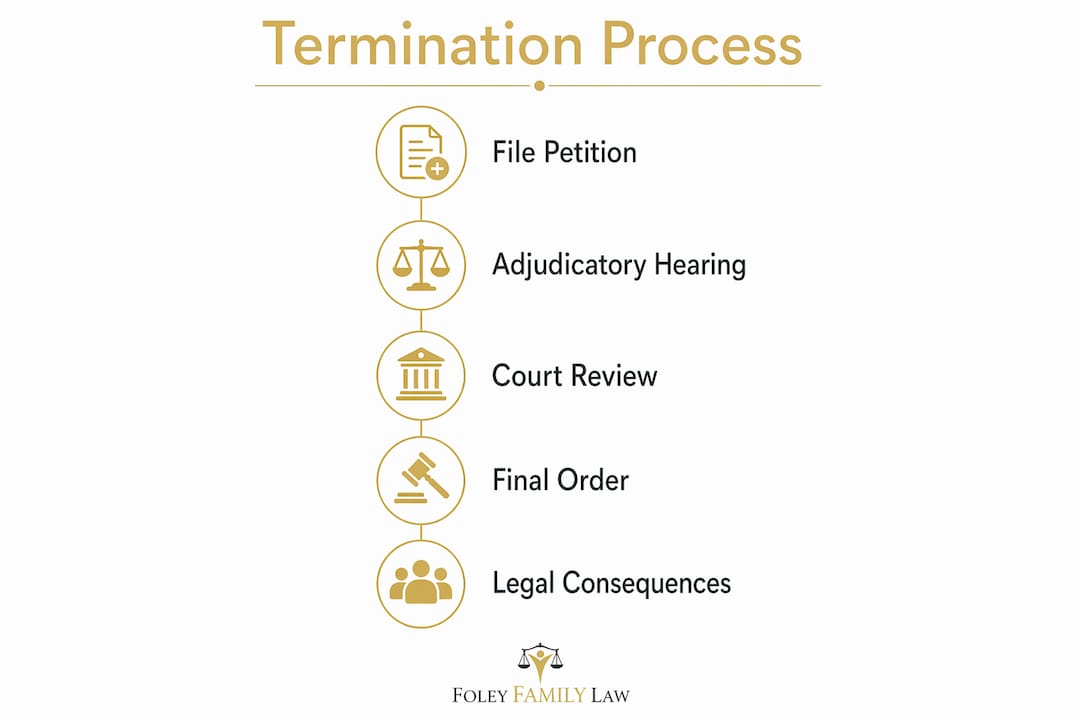
- File the petition. You or your attorney files a petition to terminate parental rights voluntarily with the appropriate Florida circuit court. The petition must identify the statutory grounds and include supporting documentation.
- Attend the advisory hearing. Under Rule 8.510 of the Florida Rules of Juvenile Procedure, the court must hold an adjudicatory hearing within 21 days of filing. The judge advises you of your right to counsel and confirms you understand the consequences.
- Court makes predicate findings. The judge must find on the record that your decision is voluntary, that you fully understand the allegations and consequences, and that you have been advised of your right to an attorney.
- Disposition order is entered. If the court approves, the findings are incorporated into a formal disposition order under Rule 8.520, and the termination becomes legally effective.
Pro Tip: If your termination connects to an adoption plan, the consent process under Chapter 63 has different timing rules and revocation windows than a Chapter 39 petition. Confirm which pathway applies before you file anything.
Under what circumstances can parents voluntarily terminate their rights?
Florida courts do not approve voluntary termination simply because a parent wants out of their responsibilities. The court applies a best-interest-of-the-child standard to every request, and termination without a pending adoption or clear statutory grounds is rarely approved.
Common circumstances where courts consider voluntary termination include:
- Adoption planning. A parent consents to termination so a stepparent, relative, or adoptive family can legally adopt the child. This is the most common scenario and typically proceeds under Chapter 63.
- Inability to provide care. A parent facing serious illness, incarceration, or chronic instability may seek termination when a stable caregiver is ready to assume full legal responsibility.
- Safety and stability concerns. When a parent recognizes that their presence creates risk for the child, voluntary relinquishment may be part of a broader plan to secure the child’s welfare.
- Statutory grounds under Chapter 39. Florida Statute 39.806 lists specific grounds including abandonment, abuse, failure to support, and voluntary surrender witnessed and notarized.
One persistent misconception deserves direct attention: you cannot voluntarily terminate parental rights simply to stop paying child support. Florida courts recognize this tactic and will deny petitions filed primarily to escape financial obligations. Termination must serve the child’s best interests, not the parent’s financial convenience.
What are the consequences of terminating parental rights voluntarily?
The consequences of voluntary termination are permanent and wide-ranging. Once a Florida court enters the termination order, all parental rights end, including custody, visitation, and the right to make decisions about the child’s education, healthcare, and welfare.

Child support obligations cease after the court order is entered. That outcome surprises many parents who assume support continues regardless. The child, however, gains a clear legal status that allows for adoption, which can provide permanency and stability that benefits their long-term development.
Pro Tip: If you are considering termination partly because of financial hardship, speak with a family law attorney about alternatives first. Modification of child support obligations may address your situation without permanently severing your relationship with your child.
Revocation is extremely limited. Under Chapter 63 consent to adoption procedures, a parent has a narrow window to revoke consent before the adoption is finalized. Outside that window, or under Chapter 39 proceedings, revocation is generally not available once the court order is entered.
Parents who want to preserve some connection to their child should consider alternatives before pursuing termination:
| Option | What it preserves |
|---|---|
| Guardianship | Legal care transfers to a guardian; parental rights remain intact |
| Supervised custody | Parenting time continues under court-ordered conditions |
| Consent to adoption with open adoption agreement | Termination occurs, but post-adoption contact may be negotiated |
| Modification of custody arrangement | Parenting responsibilities are adjusted without terminating rights |
How does Florida law protect parents during the termination process?
Florida courts treat parental rights as a fundamental constitutional interest. The predicate findings required under Rule 8.520 mirror the informed-consent standards applied in criminal proceedings, drawing on principles similar to those established in Boykin v. Alabama. The court cannot simply accept a parent’s signature and move on.
Before approving any voluntary termination, the court must confirm:
- The parent’s decision is entirely voluntary and free from coercion or undue pressure
- The parent fully understands the allegations or circumstances presented in the petition
- The parent understands the permanent consequences of termination
- The parent has been advised of the right to legal counsel and has either retained an attorney or knowingly waived that right
- The court’s findings are formally incorporated into the disposition order
“Voluntary termination is not a quick paperwork process. It is a rigorous legal proceeding requiring court approval under statutory grounds, with the court acting as a safeguard against uninformed or coerced relinquishments.”
The 21-day adjudicatory hearing timeline under Rule 8.510 is a fast-track provision, but speed does not reduce scrutiny. The court retains full authority to deny a petition if the predicate findings cannot be made. Parents who arrive at the hearing without counsel, or without a clear understanding of what they are agreeing to, often face delays or dismissal.
What should parents consider before pursuing voluntary termination?
Preparation matters as much as the decision itself. Parents who approach this process without legal guidance frequently encounter procedural setbacks that delay resolution and increase emotional strain.
- Retain a qualified family law attorney. Florida’s bifurcated termination statutes require legal counseling to determine whether Chapter 39 or Chapter 63 applies. Filing under the wrong chapter causes delays or outright dismissal.
- Gather required documents. You will need the child’s birth certificate, any existing custody or support orders, and documentation supporting the statutory grounds for termination.
- Understand county-specific procedures. Hillsborough, Pinellas, and Pasco counties each have local administrative rules that affect filing requirements and hearing scheduling. Confirm the local rules with your attorney before filing.
- Explore alternatives seriously. Guardianship, supervised custody, and temporary custody by an extended family member preserve parental rights while addressing immediate caregiving concerns. These options are worth evaluating before you pursue termination.
- Prepare for the hearing. The court will ask direct questions about your understanding and voluntariness. Arriving unprepared or emotionally distressed can raise concerns for the judge and complicate the proceeding.
- Accept the permanence. Voluntary termination of parental rights in Florida is not a temporary arrangement. Once the order is entered, the legal relationship between you and your child ends. There is no standard process to restore it.
Key Takeaways
Voluntary termination of parental rights in Florida is a permanent, court-supervised process governed by Chapters 39 and 63 of the Florida Statutes, requiring the court to confirm voluntariness, full understanding, and advisement of counsel before any order is entered.
| Point | Details |
|---|---|
| Permanent legal severance | Termination ends all parental rights, including custody, visitation, and decision-making authority. |
| Court approval is mandatory | Florida courts must make specific predicate findings before approving any voluntary termination petition. |
| Two statutory pathways exist | Chapter 39 governs dependency-based terminations; Chapter 63 governs adoption consent and voluntary relinquishment. |
| Child support ends with the order | Financial obligations cease once the court enters the termination order, but courts reject petitions filed solely to avoid support. |
| Alternatives should be considered first | Guardianship, supervised custody, and temporary custody arrangements preserve parental rights while addressing caregiving needs. |
What I have seen working these cases at Foley Family Law
The parents who come to us about voluntary termination are rarely making this decision lightly. Most have spent months, sometimes years, wrestling with it. What surprises many of them is how protective the court process actually is. Judges in Hillsborough, Pinellas, and Pasco counties take these hearings seriously. They ask hard questions. They look for hesitation. That is not a barrier. It is the system working as it should.
The misconception I encounter most often is that signing over parental rights is a straightforward administrative step. Parents sometimes arrive believing they can file a form, attend one hearing, and walk away. The reality is that termination of parental rights requires statutory grounds, court findings, and in most cases a clear plan for the child’s future. Without those elements, the petition will not be approved.
The other thing worth saying plainly: this decision cannot be undone. Parents who later regret termination have almost no legal recourse. That reality shapes how we counsel every client who raises this option. We explore every alternative first, not to delay the process, but because the permanence demands it.
— Foley Family Law
How Foley Family Law can help with parental rights cases
Voluntary termination cases require precise legal strategy from the first filing to the final hearing. Foley Family Law has guided parents through this process in Hillsborough, Pinellas, and Pasco counties, helping them understand their options, avoid procedural errors, and make decisions they can stand behind.
Whether you are considering voluntary relinquishment, exploring alternatives like guardianship, or trying to understand what family law attorneys do in cases like yours, Foley Family Law offers consultations built around your specific circumstances. William S. Foley and his team provide transparent, direct guidance without unnecessary complexity. If you are facing this decision, reach out to Foley Family Law to discuss your situation with an attorney who handles these cases every day.
FAQ
What does signing over parental rights mean in Florida?
Signing over parental rights in Florida means permanently relinquishing all legal rights to your child, including custody, visitation, and decision-making authority. The process requires court approval and cannot be reversed once the order is entered.
Can you voluntarily terminate parental rights to avoid child support?
Florida courts will deny termination petitions filed primarily to escape child support obligations. Termination must serve the child’s best interests, and courts apply that standard to every petition.
What form is used for voluntary termination of parental rights in Florida?
There is no single universal form. The petition format depends on whether the case proceeds under Chapter 39 or Chapter 63 of the Florida Statutes, and county-specific local rules also apply. An attorney can identify the correct filing documents for your jurisdiction.
How long does the voluntary termination process take in Florida?
Under Rule 8.510, the court must hold an adjudicatory hearing within 21 days of filing the petition. The full timeline depends on court scheduling, document preparation, and whether any complications arise at the hearing.
Can a parent reverse voluntary termination of parental rights in Florida?
Revocation is extremely limited and generally not available once the court order is entered. Under Chapter 63 adoption consent procedures, a narrow revocation window exists before the adoption is finalized, but outside that window, the termination is permanent.


