

For couples on the brink of divorce, one of the biggest questions looming is, "How long is this going to take?" When it comes to divorce mediation in Florida, the answer is surprisingly straightforward: most mediations wrap up within three to six months.
That timeline is a world away from traditional court litigation, which can easily drag on for 18 months or even longer.
The Typical Timeline For Divorce Mediation
Going through a divorce can feel like you're setting out on a long, unpredictable journey. Many people picture the only path as a drawn-out, hostile court battle. But divorce mediation offers a much more direct and controlled route to your destination—think of it as a nonstop flight versus one with multiple, stressful layovers.
At our firm, we are proud to serve our entire community, including all LGBTQ+ individuals and families, handling all family and divorce issues, including gay divorce, gay custody issues, and gay or transgender name changes. We do not discriminate and ensure a respectful and efficient process for everyone.
This approach, known as alternative dispute resolution, brings in a neutral third-party mediator. Their job isn't to make decisions for you. Instead, they guide productive conversations, helping you and your spouse find common ground on the big issues: dividing property, figuring out alimony, and crafting a parenting plan that truly works for your family.
A Faster Path To Resolution
One of the biggest perks of mediation is its efficiency. You aren't stuck waiting months for a judge's availability or dealing with endless procedural delays. Instead, you schedule sessions that work for your schedules. This flexibility is a huge benefit for our clients across Pasco, Pinellas, and Hillsborough Counties who are ready to move forward practically.
Mediation puts you back in the driver's seat of your own divorce timeline. By choosing cooperation over conflict, you can reach a fair agreement without the emotional and financial exhaustion of a long court fight.
The timeline below gives you a clear visual of just how different the paths of mediation and litigation really are in Florida.
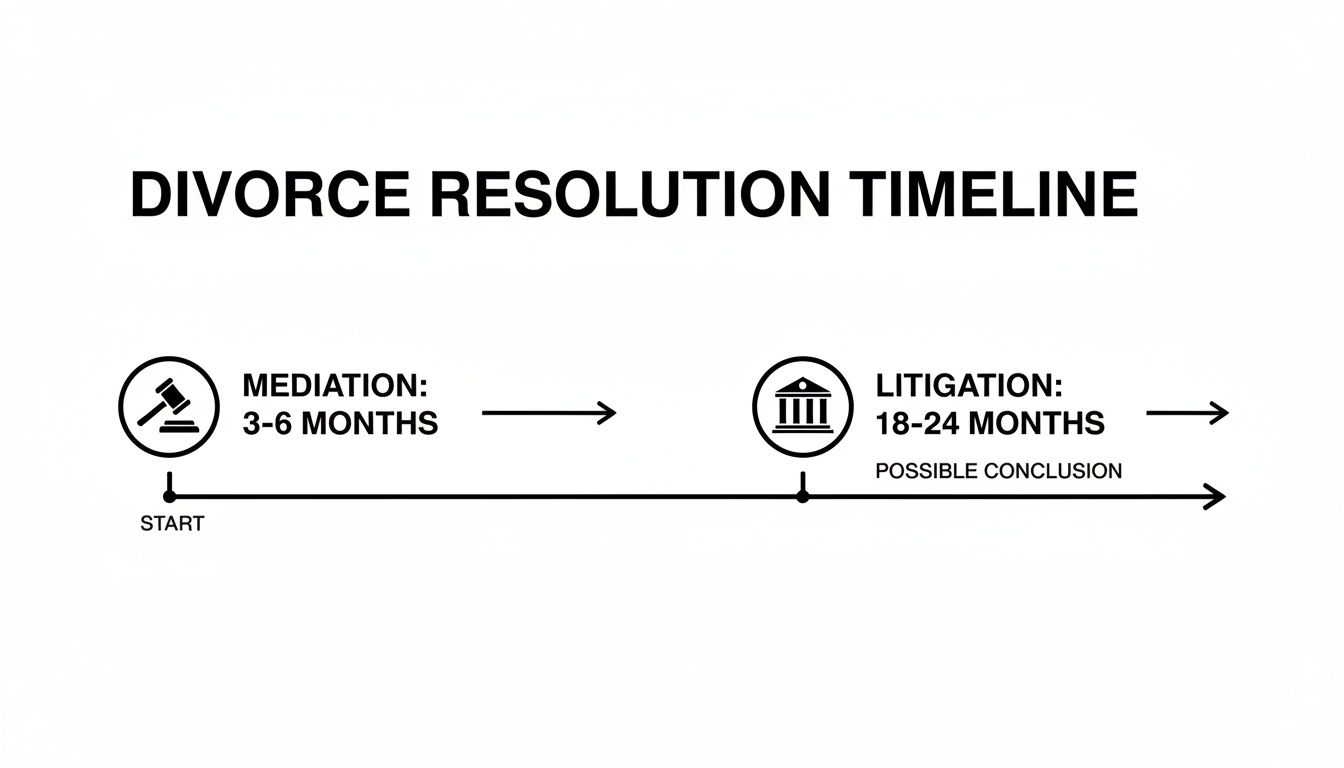
As you can see, the difference is stark. Mediation can save you more than a year of living in limbo. That time savings also means major cost savings.
Mediation Vs. Litigation: A Quick Comparison
To put it in perspective, let's break down the key differences between settling your divorce in mediation versus slugging it out in court. The contrast in time, cost, and control is significant.
- Timeline: Divorce mediation in Florida typically takes 3-6 months. Traditional litigation, on the other hand, averages 18-24 months or longer.
- Cost: The total cost for a couple in mediation is often a fraction of litigation expenses.
- Control: In mediation, you and your spouse make the final decisions together. In litigation, a judge makes the final decisions for you.
The numbers speak for themselves. Mediation is not only dramatically faster, but it keeps the decision-making power in your hands and protects your finances from the runaway costs of a court battle.
You can read more about the mediation process in our detailed guide to see exactly how this structured, cooperative approach helps you reach a resolution so much more efficiently.
Key Factors That Influence Your Mediation Schedule
While averages give you a ballpark idea, the truth is no two divorces are the same. The real answer to "how long does divorce mediation take?" depends entirely on your specific situation. Think of it like a road trip—the time it takes is all about the traffic, road conditions, and how many stops you need to make along the way.
Your mediation journey is shaped by the unique details of your marriage and separation. Four big factors will either speed things up or stretch out your timeline.
Complexity Of Your Assets And Debts
The size and type of your marital estate play a huge role. A couple with a shared house, two cars, and some straightforward retirement accounts can usually sort through property division pretty quickly. Their financial picture is clear, which makes it much easier to land on a fair agreement.
But a high-net-worth divorce with multiple properties, a family business, or complex investments will naturally take more time. For our clients here in Hillsborough County, for example, untangling business assets or putting a value on a professional practice requires a deep dive into financial discovery and expert analysis before you can even start a productive negotiation. To get a better handle on this critical step, you can learn more about what is involved in the discovery process for a Florida divorce.
The Level Of Interpersonal Conflict
The emotional dynamic between you and your spouse is probably the most powerful factor of all. If you can both come to the table with a problem-solving mindset, the process will fly by. Spouses who are willing to communicate with respect and find common ground can often wrap things up in just a few sessions.
On the flip side, high levels of anger, resentment, or mistrust will bring everything to a screeching halt. When every single decision becomes a battle, progress slows to a crawl. A good mediator is skilled at managing this conflict, but it takes a real willingness from both of you to focus on the future—not the past—to get things done efficiently.
Details Of The Parenting Plan
For parents, hashing out a comprehensive Parenting Plan is priority number one. If you and your spouse already see eye-to-eye on timesharing, decision-making, and holiday schedules, you’ve already cleared a major hurdle. That kind of alignment can shorten the mediation process dramatically.
Disagreements over custody are one of the most common reasons mediations drag on. Hot-button issues like relocation, school choices, or fundamental differences in parenting styles can take several sessions to work through. In these cases, especially for families across Pasco and Pinellas Counties, the mediator’s job is to help you explore creative solutions that put your children first while respecting both parents' rights. Taking the time to be thoughtful and detailed here is well worth it, as it prevents a world of conflict down the road.
How Modern Mediation Formats Reshape the Timeline
The old idea of resolving a divorce in a single, marathon day locked in a conference room is quickly becoming a thing of the past. Modern mediation now offers far more flexibility, reshaping the timeline by focusing on thoughtful progress over grueling, high-pressure sessions. This evolution is making the process more accessible and frankly, more efficient for everyone.

This is a significant shift from how things used to be done. Traditionally, mediation meant everyone had to gather in person for long, often exhausting, meetings. But the rise of virtual mediation has completely transformed both accessibility and scheduling. Online platforms let us meet with clients from different locations, which offers incredible convenience and cuts out travel completely.
The Shift To Multi-Session Mediation
Instead of trying to solve every single issue in one eight-hour day, the multi-session approach breaks the process down into shorter, more manageable meetings. These sessions might be two or three hours each, spread out over several weeks.
This format offers a few key advantages that actually help shorten the overall timeline:
- Reduced Burnout: Shorter sessions prevent the emotional and mental fatigue that can derail productive conversations.
- Time for Reflection: You get time between sessions to review proposals, gather the documents you need, and talk things over with your attorney.
- Focused Agendas: Each meeting can tackle a specific issue, like property division or a parenting plan, allowing for more focused and efficient progress.
This methodical approach often leads to better, more durable agreements because decisions are made with careful thought, not under pressure. For those curious how this compares to other dispute resolution methods, you might find our guide on collaborative divorce versus mediation helpful.
The Rise Of Virtual Mediation
Technology has become a powerful ally in making mediation more efficient. Virtual mediation using platforms like Zoom eliminates geographical barriers—a total game-changer for our clients across Pasco, Pinellas, and Hillsborough Counties.
Virtual mediation isn’t just about convenience; it’s about efficiency. By removing travel time and offering flexible scheduling, we can often move the process along much faster, helping you reach a final agreement sooner.
This format is particularly useful for:
- Military Members: A spouse on deployment can participate fully without needing to be physically present.
- Busy Professionals: Scheduling a two-hour virtual meeting is far easier than blocking off an entire day for an in-person session.
- High-Conflict Couples: Meeting from separate, safe locations can lower the tension and foster more constructive dialogue.
By embracing these modern tools, we can tailor the mediation process to your specific needs, making it a more accessible and often quicker path to getting things resolved.
From Handshake To Final Judgment: What Happens Next
Reaching a verbal agreement in mediation feels like crossing the finish line, but there are a few more crucial steps to make your divorce official under Florida law. Think of your mediated agreement as the detailed architectural plans for your new life; now, your attorney needs to build the legally sound structure that the court will approve.
This final leg of the journey is what transforms your handshake deal into a binding reality. Knowing what to expect gives you clarity and confidence as you prepare to close this chapter and start the next. We're here to guide clients in Pasco, Pinellas, and Hillsborough Counties through this entire process, from start to finish.
Drafting The Marital Settlement Agreement
The first and most critical step is getting those verbal agreements down on paper in a formal, written document. Your attorney will meticulously draft a Marital Settlement Agreement (MSA) and, if you have children, a Parenting Plan. These documents are the legal bedrock of your entire divorce.
After a successful mediation, your agreements are formalized into legally binding personal family contracts that cover every single aspect of your resolution. This isn't just routine paperwork; it’s a detailed contract that spells out the division of every asset and debt, any alimony arrangements, and the exact details of your parenting time schedule. You can get a much deeper understanding of what a Marital Settlement Agreement includes in our detailed guide.
Both you and your spouse, along with your respective attorneys, will review these documents with a fine-tooth comb. This is your chance to make sure every last detail is accurate and truly reflects the spirit of what you agreed upon in mediation. Once everyone is satisfied, both parties sign the agreement.
Filing With The Court And The Final Hearing
With the signed agreement in hand, the next step is filing it with the court. This tells the judge that you’ve resolved all outstanding issues on your own and are ready to finalize the divorce. Your case is then scheduled for a short, uncontested final hearing.
This final hearing is typically very brief, often lasting just five to ten minutes. It is not a trial. It's simply a formality where the judge confirms that the agreement was entered into freely and that it's legally sound.
During this hearing, the judge will ask a few simple questions to verify your identity and confirm that you believe the agreement is fair. They will then sign the Final Judgment of Dissolution of Marriage, which officially incorporates your MSA and Parenting Plan. The moment the judge signs that document, your divorce is legally complete. This final step usually happens within a few weeks of filing your agreement.
Practical Steps to Speed Up Your Mediation
While a lot of factors can stretch out the divorce mediation timeline, you have more control than you might think. It helps to approach it like a critical business negotiation: the more prepared you are, the faster you’ll get to a resolution. A little proactive effort before that first session can make a massive difference in the time, stress, and money involved.
The secret is walking into the room with a crystal-clear picture of your finances and what you want to achieve. When you do the legwork upfront, the mediator can dive right into finding solutions instead of spending billable hours just gathering basic facts. For our clients across Pasco, Pinellas, and Hillsborough Counties, this initial prep work is the single best way to fast-track the process.
Come To The Table Prepared
Getting organized does more than just save time—it sends a powerful message that you’re serious about finding a fair and efficient agreement. It also puts you in a position to negotiate from a place of confidence, ensuring you don’t overlook critical details under pressure.
Here’s a quick checklist of what you should have ready:
- Gather Key Documents: Pull together recent pay stubs, bank and credit card statements, tax returns (at least the last two years), retirement account summaries, and deeds to any property you own. Having these organized and on hand is a game-changer.
- Create a Household Budget: You need to know where the money goes now and what it will take to run two separate households after the divorce. This is non-negotiable for any real discussion about alimony or child support.
- Define Your Goals: Figure out what truly matters most to you. Is it keeping the family home? Protecting your 401(k)? Write down your top three priorities and also identify a few areas where you might have some wiggle room.
When you’ve done your financial homework and know your non-negotiables, you shift the entire dynamic of mediation. It stops being a fact-finding mission and becomes a focused, problem-solving session. That saves everyone time and money.
Adopt A Resolution-Focused Mindset
Your attitude is every bit as important as your paperwork. Mediation is built on compromise. It's not a courtroom battle designed for one person to win and the other to lose. If you walk in ready to listen and genuinely look for common ground, things will move much, much faster.
This is also why talking with an experienced family law attorney before you start mediation is so important. They can walk you through your rights and obligations under Florida law, help you set realistic expectations, and map out a solid negotiation strategy. That professional guidance is invaluable. If you're looking for the right person for that role, our guide on how to choose a divorce attorney has some practical tips.
Ultimately, the fastest way to a final agreement is a mindset geared toward finding a fair, workable settlement.
Unpacking Common Questions About the Mediation Timeline
As you start to map out the mediation process, it’s natural for specific questions to pop up. Here are some straightforward answers to the concerns we hear most often from our clients across Pasco, Pinellas, and Hillsborough Counties.
Can We Really Finish Mediation In A Single Day?
Yes, it’s possible, but it’s not the norm. For a mediation to wrap up in one full-day session, a couple typically needs to have very straightforward finances, no minor children, and a genuine, pre-existing commitment to cooperation. Think of it as the express lane—it works, but only for a very specific set of circumstances.
More often than not, breaking the process into two or more shorter sessions yields far better results. This approach isn't about dragging things out; it's about giving you both the breathing room to think through proposals, gather necessary information, and avoid the fatigue that leads to rushed, regrettable decisions.
What If We Only Agree On Some Issues?
That’s still a huge win. A partial agreement is a major step forward that directly saves you time, money, and stress.
Any issues you successfully resolve are memorialized in a partial settlement agreement. What this does is effectively narrow the battlefield. Instead of fighting over everything from the house to the parenting schedule, you might only have one or two sticking points left for a judge to decide. You’ve taken control of most of your case, which is a massive accomplishment.
Every single issue you resolve in mediation is one less issue you have to pay attorneys to fight about in court. This incremental progress is one of the most powerful benefits of the entire process.
Do Our Attorneys Need To Be At The Mediation?
In Florida, it is standard practice—and something we strongly recommend—for your attorney to attend mediation right alongside you. Their presence is absolutely critical for a few key reasons.
Your lawyer is there to provide on-the-spot legal advice, ensuring you understand the long-term consequences of any settlement offer on the table. They act as your advocate, protecting your rights and making sure the final written agreement is legally sound and accurately reflects everything you decided upon. We always advise our clients to have their trusted legal counsel by their side during this pivotal stage.
At Foley Family Law, we know you need a clear strategy to move forward. Our team is here to guide you through mediation efficiently while always protecting your rights and your future. We practice in Pasco, Pinellas, and Hillsborough Counties. When you're ready to take the next step, contact us for a consultation.


