

The short answer is yes, grandparents can sue for visitation rights in Florida, but actually succeeding is incredibly rare. Our state law fiercely protects a parent's fundamental right to raise their children as they see fit. This creates one of the highest legal hurdles in the entire country for grandparents who want the court to order time with their grandchildren.
The Reality Of Grandparent Visitation In Florida
When your bond with a grandchild is cut off, the emotional toll can be devastating. We often hear from loving grandparents across Pasco, Pinellas, and Hillsborough Counties who feel lost and are desperate to know what legal options they have. The question "can grandparents sue for visitation rights?" is one of the most common—and most complex—we encounter.
This guide will cut through the noise and give you a realistic look at how this works in Florida. It's critical to understand that winning a grandparent visitation case isn't about proving you are a loving, capable, and important part of your grandchild's life. That's not enough.
The heart of any successful petition rests on a much, much higher standard: you must prove that without your presence, your grandchild will suffer demonstrable harm.
This completely shifts the focus from what you want to the child's direct well-being. The court’s primary duty is to uphold a parent’s constitutional right to make decisions for their child, free from government interference.
What Does This Mean For You?
This incredibly high legal bar means that many wonderful grandparents who have strong, loving relationships with their grandchildren may still be unable to get a court order for visitation if a parent says no. The law starts with the presumption that a fit parent is acting in their child's best interests. To overcome that, you have to bring specific, compelling evidence that proves otherwise.
At Foley Family Law, we get it. We understand these complexities and provide compassionate, realistic guidance for families facing this tough situation in Pasco, Pinellas, and Hillsborough Counties. We're committed to helping all clients, including LGBTQ+ grandparents navigating these sensitive issues, understand their rights and the harsh realities of Florida's demanding laws. We're here to give you a clear, honest assessment of where you stand.
Understanding Florida's High Legal Standard
Florida law is built on a powerful principle often called the 'parental right of privacy.' Think of a family as a private home; the courts are extremely hesitant to unlock the front door and step inside unless there is a clear and serious problem that needs to be addressed.
This foundational legal concept means that judges in Pasco, Pinellas, and Hillsborough Counties must begin every case by presuming that fit and capable parents know what is best for their own children. That presumption gives parents a massive legal advantage right from the start.
To ask a court to intervene in a parent's decision, you can't simply argue that seeing your grandchild would be a good thing or that you miss them dearly. While those feelings are completely valid and understandable, they just don't meet Florida's tough legal requirements.
The Focus Is On The Child, Not The Grandparent
Your legal petition has to present compelling and specific evidence that the parent's decision to deny you visitation is actively causing demonstrable harm to the child. From the court's perspective, the focus is entirely on the child's well-being, not the grandparent's desires or feelings of loss.
This strict standard is a modern development. While many states have laws for grandparent visitation, pivotal court cases have clarified that these laws cannot infringe on the fundamental constitutional rights of parents to raise their own children. This created the delicate balance we see today, forcing courts to weigh parental rights against the child's best interests.
In simple terms, the court isn't asking, "Would it be nice for the child to see their grandparents?" Instead, the court is forced to ask, "Is the parent’s decision to prevent contact causing actual, identifiable harm to this child?"
This is a critical distinction that shapes every single grandparent visitation case in Florida.
What This Means For Your Case
This high bar requires a shift in thinking. Your case can't be built on what you feel is unfair or wrong. It must be constructed with objective evidence that a judge can see and measure.
For example, you would need to prove that the loss of your specific relationship is causing the child significant emotional or psychological distress—something very different from a child simply being sad about not seeing you.
Understanding this high legal standard is the first and most important step in assessing whether you can realistically sue for visitation rights. It's also vital to distinguish these cases from those involving other parental issues, like those discussed in our guide on the termination of parental rights.
When You Can File For Grandparent Visitation
In Florida, the law holds a very strong presumption that fit parents act in the best interests of their children. This means you generally can't sue for time with your grandchildren if their family unit is "intact." The courts in Pasco, Pinellas, and Hillsborough Counties will not interfere with the decisions of two fit parents raising their children together.
For a grandparent to even get a foot in the courthouse door, the law requires a specific "triggering event." These are situations that have unfortunately disrupted the intact family, legally opening the door for a third party—like a grandparent—to file a petition with the court.
Meeting one of these conditions is the first and most critical step. Without it, you simply don't have the legal standing to ask a judge for visitation rights. It's crucial to understand that meeting this requirement only gives you the right to file your case. It is not a guarantee you will win. You still face the monumental task of proving that your grandchild will suffer actual harm without having you in their life.
Specific Situations That Allow You To File
Florida law is very clear and narrow about the circumstances that allow a grandparent to ask for visitation. Think of these requirements as keys that unlock the courthouse door. If you don't have one of these keys, the door remains shut, no matter how close you are to your grandchildren.
Here's a closer look at what the law generally requires before you can file a petition.
- One or Both Parents Are Deceased: The death of a child's parent is a profound event that fundamentally alters the family structure, allowing a grandparent to file.
- One or Both Parents Are Missing: A parent is legally "missing" if their location has been unknown for a significant period of time despite a diligent search.
- One or Both Parents Are In A Persistent Vegetative State: This isn't a temporary condition; it requires a formal medical diagnosis confirming the parent’s irreversible state.
- One Parent Is Deceased, Missing, or in a PVS AND The Other Parent Poses a Threat of Harm: This is a two-part test. You must show that one parent is unavailable and provide strong evidence that the other parent's conduct is dangerous to the child.
As you can see, the requirements are strict and tied to tragic circumstances. The law is designed to protect parental rights above all else.
The existence of one of these "triggering events" is non-negotiable. If the child’s parents are married, living together, and neither is deceased, missing, or incapacitated, a grandparent has no legal basis to sue for visitation in Florida. This is true regardless of how strong their bond with the grandchild is.
These situations are very different from cases where you might be seeking more than just visitation, such as full or partial custody. For those facing different circumstances, you can learn more about the requirements for temporary custody by an extended family member in our detailed guide.
Understanding these legal nuances is the key to figuring out your path forward. At Foley Family Law, we are experienced in guiding all families, including LGBTQ+ families, through these complex and emotionally charged situations in Pasco, Pinellas, and Hillsborough Counties.
Proving Harm Is The Key To Your Case
Once you’ve met the strict legal requirements to even file a petition, you’ll face the single biggest challenge in your case: proving the parent's decision to deny visitation will cause your grandchild demonstrable harm. This is the absolute core of the issue, and it's what judges in Pasco, Pinellas, and Hillsborough Counties will focus on above all else.
So, what does that really mean in practice? It’s not enough to say that the parents are making a choice you disagree with, or even that your grandchild will be sad without you. The court needs to see clear evidence of a much deeper, more significant negative impact.
The legal question isn't, "Is it unfair that I can't see my grandchild?" Instead, the court must ask, "Will this child suffer actual, identifiable emotional or developmental damage if this specific grandparent relationship is severed?"
This is an incredibly high bar to clear. Florida courts will not second-guess a fit parent’s decisions just because a grandparent thinks they know better.
What Qualifies As Harm?
Demonstrable harm goes way beyond hurt feelings or simple disappointment. We're talking about tangible, negative consequences for the child's well-being. Think of it this way: you have to prove that your relationship is so fundamental to the child's life that removing it would be like yanking out a foundational support beam, causing real instability.
For instance, a compelling case for harm might involve one of these scenarios:
- A Pre-existing Caregiver Role: If you were the child's primary caregiver for a long time and they see you as a parental figure, suddenly cutting off that bond could inflict severe emotional trauma.
- Verifiable Emotional Distress: You might have evidence from a child's therapist, school counselor, or teacher noting a significant downturn in the child's mental health or behavior that lines up exactly with when they lost contact with you.
- Special Needs Connection: If you are uniquely equipped to help care for a grandchild with special needs and have been a consistent part of their support system, removing you could actively set back their progress.
On the other hand, arguments that the parents have a different lifestyle, are too strict, or that you just feel unfairly shut out will not meet this demanding legal standard.
The Rise Of Grandparent Caregivers
The reality is that many grandparents today have relationships with their grandchildren that are far deeper than just occasional visits. We're seeing a major shift where grandparents are stepping into primary caregiving roles. Millions of grandparents in the country are actively raising their grandchildren. These aren't just temporary arrangements, either. Many of these caregivers had been looking after their grandchildren for five years or more. You can explore more data on these permanent family restructurings at Lurie Children's Hospital.
This trend can absolutely be relevant in court. If you have been a constant, stable presence in a child's daily life, proving that your removal will cause harm becomes a much more believable argument. Your attorney can help frame this evidence to show the true depth and importance of your bond. It's also critical to distinguish this from situations involving parental alienation, which brings its own unique set of legal challenges. You can read our guide to understand the examples of parental alienation and see how they differ.
The Legal Process For Seeking Visitation
Navigating the court system when you want to sue for visitation rights can feel like trying to find your way through a maze blindfolded. The journey is often emotionally draining and legally complex.
Breaking it down into clear, manageable steps can help you understand what to expect from the process in Pasco, Pinellas, and Hillsborough County courts.
The path generally begins with an initial consultation with an experienced family law attorney. This first meeting is a crucial reality check, where your lawyer will assess the facts of your situation against Florida's strict legal standards. If you have the legal standing to file, the next step is drafting and filing a formal Petition for Grandparent Visitation with the appropriate court. This document officially starts your lawsuit.
From Filing To Discovery
Once the petition is filed, the child's parents must be formally notified through a process called "service of process." This ensures they are aware of the lawsuit and have an opportunity to respond legally.
Following this, both sides enter a phase known as discovery, where evidence is gathered. This can involve exchanging documents, answering written questions under oath, or giving sworn testimony in a deposition outside of court.
This is the stage where you shift from what feels unfair to what you can actually prove is harmful to the child.
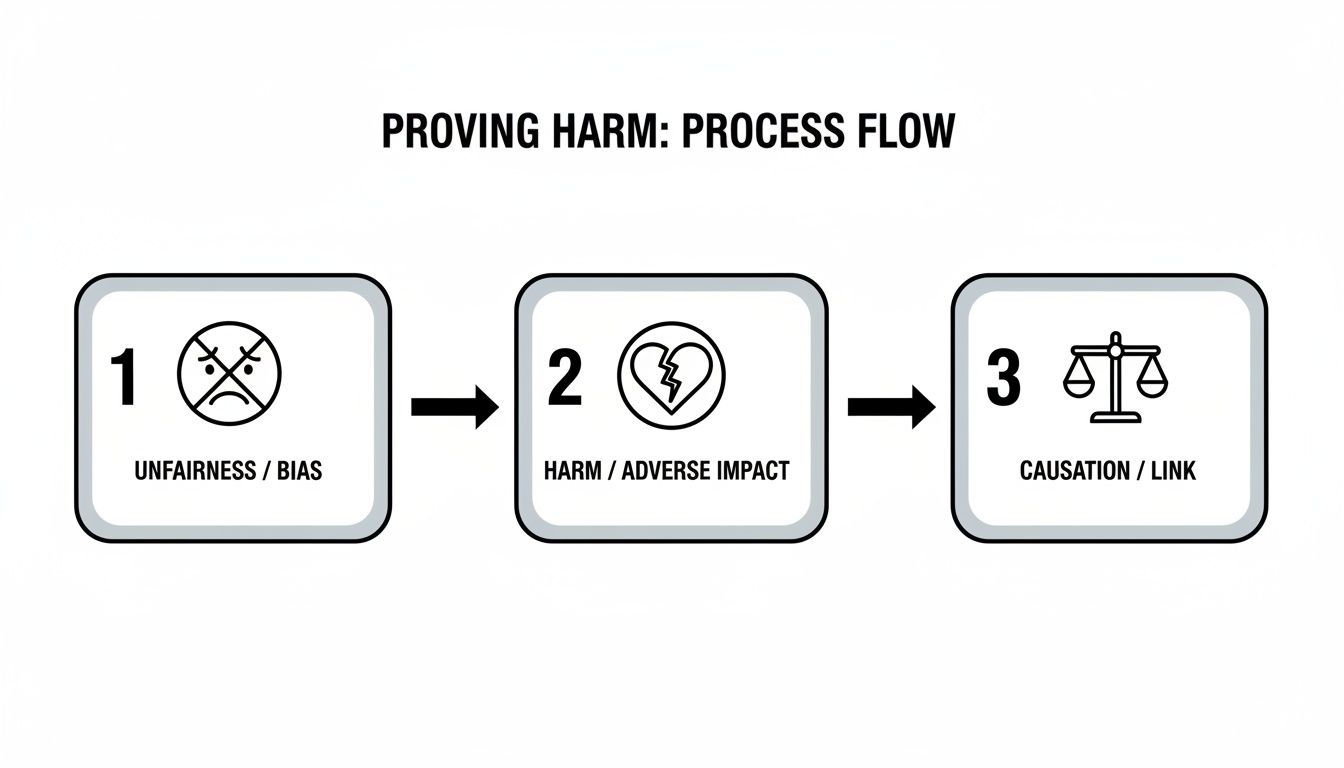
The visualization highlights a critical point: your personal feelings of being wronged are legally separate from the objective evidence of harm the court requires to intervene.
Mediation And The Path To A Hearing
Before a case goes to a full trial, Florida courts almost always require the parties to attend mediation. This is a confidential meeting where a neutral third-party mediator helps you and the parents try to negotiate a mutually agreeable solution.
If mediation is successful, you can create a legally binding agreement without a judge ever having to make the final decision. It puts the control back in your hands.
If no agreement is reached, the case proceeds toward a final hearing or trial. During the hearing, both sides will present their evidence, call witnesses, and make legal arguments to the judge. This is where having compelling proof of harm becomes absolutely critical.
Sometimes, the court may appoint a specific professional to investigate the family's situation and make recommendations. To better understand this aspect, you might be interested in our article explaining what a Guardian ad Litem is in Florida custody cases.
The entire process, from filing to a final decision, can be lengthy and emotionally taxing. Having a skilled attorney who understands the local procedures is essential. At Foley Family Law, we are committed to providing clear guidance to all families, including LGBTQ+ families, as they move through this difficult journey in Pasco, Pinellas, and Hillsborough Counties.
Planning Your Next Steps With Foley Family Law
Realizing you need to explore your legal options is the first, and often hardest, step when you've been cut off from a grandchild. The question, "can grandparents sue for visitation rights?" is emotionally draining, and the legal road in Florida is unfortunately full of obstacles.
As we've laid out, Florida’s laws on this are incredibly strict. The state gives a parent's right to privacy enormous weight, which means your entire case hinges on proving that the child will suffer demonstrable harm without you. That's a very high bar, and it demands a careful, strategic approach from day one.
A Clear and Honest Assessment
At Foley Family Law, we bring compassionate and experienced representation to these sensitive family matters. We are proud to serve all members of the Tampa Bay community—including LGBTQ+ families, first responders, and military families—with the dignity and understanding they deserve. Our team lives and breathes the nuances of family law across Pasco, Pinellas, and Hillsborough Counties.
A consultation with our team will give you an honest, clear assessment of your specific circumstances and help you decide the best path forward. We believe in providing realistic expectations, not false hope.
We'll sit down with you, go over the facts of your situation, explain exactly how the law applies, and map out any potential legal avenues you might have. Protecting your family bonds starts with having the right information. We invite you to contact our office to schedule a confidential meeting and get the clarity you need.
If you are facing a family law issue, you might be interested in finding a qualified family law attorney near you to discuss your specific needs.
Common Questions We Hear About Grandparent Rights
Once people start to dig into the complexities of Florida’s grandparent visitation laws, the "what-ifs" really start to pile up. Every family situation is unique, and it’s natural to wonder how these strict rules apply to your specific circumstances.
Here are a few of the most common questions we get from grandparents across Pasco, Pinellas, and Hillsborough Counties, along with some straightforward answers.
What if the Parents Verbally Agreed to Visits, but Now They're Backing Out?
This is a painful and frustratingly common scenario. Unfortunately, in Florida, a verbal promise for visitation isn’t worth the paper it’s not written on. It’s simply not legally binding.
If a parent has a change of heart, that informal agreement gives you zero power to enforce it. This is precisely why a formal, court-ordered parenting plan is so critical when your relationship with the child’s parent is rocky or unpredictable. A court order creates a reliable, enforceable schedule that a parent can’t just change on a whim; only a judge can modify it.
Can I Get Visitation if My Own Child Supports It, but Their Ex is Blocking Me?
This situation is incredibly tough, and we see it all the time. You'd think having your own child on your side would be enough, but Florida law gives enormous weight to the decisions of both parents.
Even if your son or daughter wants you to see your grandchild, the other parent’s objection means you will almost certainly still have to climb that same high legal mountain: proving that the child will suffer demonstrable harm without you. The court is still required to defer to the parents' joint decision-making rights. That said, having your child's support can be a huge asset in private negotiations or mediation, and it's something an experienced attorney can use to craft a specific strategy for your case.
Are Great-Grandparents' Rights the Same as Grandparents'?
Yes, they are. Florida law extends the same potential for visitation rights to great-grandparents, but it also subjects them to the exact same demanding legal standards.
A great-grandparent has to meet all the same requirements. First, they must show one of the specific "triggers" has occurred (like a parent's death or disappearance). And second, they must prove that denying visitation would cause the child demonstrable harm. The courts give the same powerful deference to parental privacy rights, whether it’s a grandparent or a great-grandparent filing the petition.
Navigating these emotional and legally complex issues requires clear, honest advice. The team at Foley Family Law provides strategic guidance to families facing these exact challenges in the Tampa Bay area. We proudly serve clients in Pasco, Pinellas, and Hillsborough Counties. If you need a realistic assessment of your options, contact us for a consultation.


